

It Will Never Stop

It Will Never Stop
Adrian Chiarella’s feature debut, Leviticus, is a fresh and memorable addition to the queer horror subgenre, a film that stays with you in a quiet, unsettling way. It carefully balances supernatural horror with coming‑of‑age heartbreak, delivering something as terrifying as it is romantic. What begins as an eerie tale slowly reveals itself to be a potent, deeply emotional story about queer love pushed into the shadows, the kind of fear that hits hardest when you’ve been made to feel wrong for wanting someone.
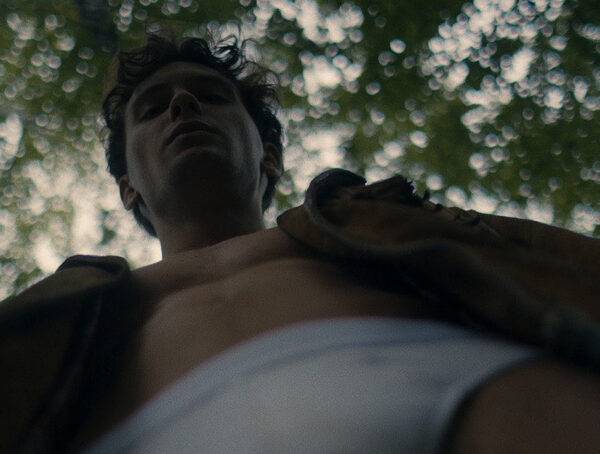
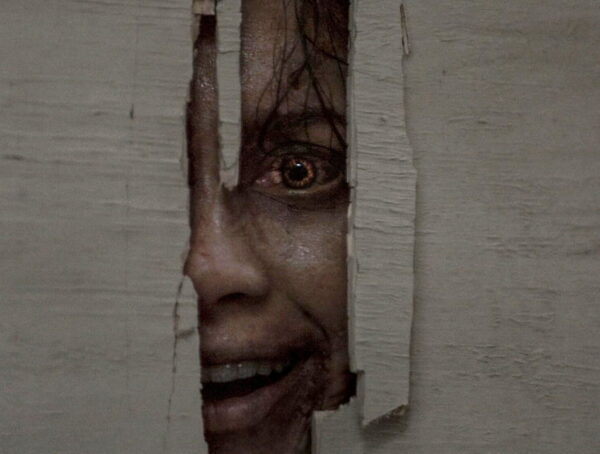
We’re introduced to Naim (Joe Bird), a quiet teen who moves to a small, conservative Australian town and forms a connection with Ryan (Stacy Clausen), as both boys try to keep their feelings hidden from everyone around them. After they’re forced into a brutal conversion therapy ritual, a shape‑shifting entity attaches itself to them, taking the form of the person they desire most — each other. As they try to escape it, the boys are pushed into a fight against both the demon and the shame their community has carved into them.
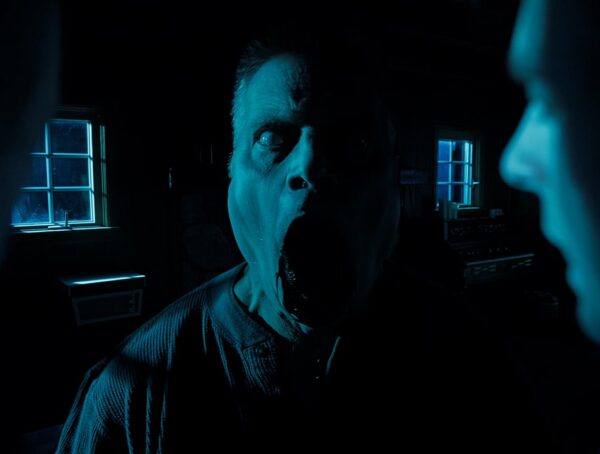
I had the chance to see an advance screening of Leviticus at Toronto’s Inside Out Film Festival, and it’s a film that lands with a restrained but powerful impact. The title points directly to the Book of Leviticus, one of the most frequently cited scriptures used to justify homophobia, and that idea sits at the heart of the story. Chiarella shows how weaponized religion shapes this small town, turning fear into something these kids learn to carry in their everyday lives. The film kicks off with a sinister opening scene that pulls you in right off the bat, then builds tension through striking cinematography, grounded dialogue, and an enthralling gay love story at its center. The tight 90‑minute runtime could have used a few more scares, and the final act loses a bit of momentum, but Chiarella still manages to stick the landing beautifully.
Joe Bird and Stacy Clausen carry Leviticus with a level of commitment that marks them as rising talents. Because the film stays so tied to Naim and Ryan, the weight of the story rests almost entirely on their shoulders, and both actors rise to the occasion with broad emotional range. They shift between tenderness, fear, and full‑blown panic with ease, even playing two versions of themselves. The two share real on‑screen chemistry, and you feel it in several standout moments, including a sexy bus scene woven between the chaos. Audiences will want to see more of both actors in future genre work.
Chiarella’s command of atmosphere gives Leviticus a steady sense of dread. Cinematographer Tyson Perkins wonderfully captures the bleak rural town, using wide, desolate frames that reflect the characters’ longing. The film features minimal dialogue, so it leans heavily on facial expressions, body language, and the stark Australian landscape to carry the emotional weight, and Perkins’ visuals make even the silence feel loaded. The scares land because tension stays tight throughout, supported by a few bursts of gore and well‑timed jump scares that remind you this is still very much a horror film. Composer Jed Kurzel deepens that unease with a haunting score that blends minimalist strings and synths, echoing his earlier work in films like The Babadook and Alien: Covenant, while adding a more intimate, romantic undercurrent that suits Naim and Ryan’s story.
Leviticus is a bold and timely piece of queer horror, made with care and intention. Its moody atmosphere and thematic core make it a tense yet deeply rewarding watch, and Chiarella proves himself to be a promising new voice in the genre. Thoughtfully crafted and striking in execution, the film leaves a strong impression long after its final moments. Leviticus earns a spot high on the list of queer horror films, and you’ll want to catch it when it hits theatres on June 19th.