

Be Careful Who You Wish For

Be Careful Who You Wish For
Directed by Curry Barker, Obsession is a well‑produced and thought‑provoking psychological horror film that pairs strong performances with genuine tension and a bleak, unsettling atmosphere. The story’s simple premise lingers long after it’s introduced, unfolding through carefully staged sequences, shadows, and movements that generate a palpable sense of unease. While the film often takes an artistic‑over‑realistic approach, this choice reinforces the mood but also occasionally disrupts the narrative. Still, Barker’s filmmaking remains striking throughout, showcasing a level of craft that elevates the material.
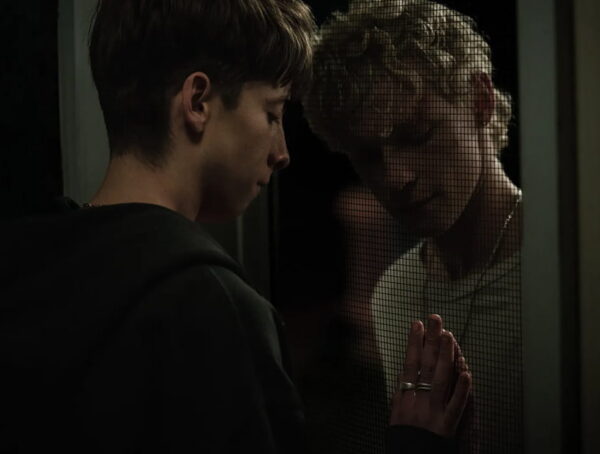
Blumhouse’s Obsession follows Bear (Michael Johnston), a timid music store clerk who secretly longs for his best friend, Nikki (Inde Navarrette), but lacks the courage to admit it. After purchasing the enigmatic One Wish Willow, a mysterious trinket said to grant a single desire, he wishes for Nikki to love him more than anyone in the world. The wish works, but the magic strips away her boundaries, turning their once‑innocent friendship into a waking nightmare. As Nikki’s mannerisms become uncontrolled, Bear is forced to confront the dark price of getting exactly what he asked for.
Obsession succeeds in presenting a provocative and smart exploration of infatuation, consent, and the consequences of desire without feeling heavy‑handed. As a fresh take on the possession subgenre, the film leans into the classic “be careful what you wish for” framework, twisting the familiar morality of stories like Aladdin into something far more sinister, in which tampering with free will comes at a devastating cost. Curry Barker’s direction brings impressive creativity to the film’s modest budget, estimated between $750,000 to $1 million, proving that committed performances, practical effects, and a carefully cultivated atmosphere can outshine large‑scale studio productions. Disturbing imagery, escalating tension, and a sense of mounting dread give the story real bite. At the same time, its focus on control and agency, particularly in how Bear’s choices shape the tragic ordeal, sets it apart from other genre releases.
Where Obsession loses momentum is in its predictability, since the narrative often follows familiar paths and offers few genuine twists or turns. Several structural choices and aspects of the writing feel safe, and the lack of lore surrounding the wish leaves the supernatural elements underdeveloped, even though there’s room to push further into madness. Nikki’s transformation plays out like a fractured, possession‑like state rather than a corrupted form of love, yet the film provides no clear rhyme or reason for how the One Wish Willow shapes her behaviour. Some may argue that it’s this unpredictability that works for the plot, but it also results in moments that feel driven more by shock value than logic. For instance, having Nikki feed Bear his dead cat for lunch feels less like the action of someone obsessed and more like something done out of pure malice, the kind of gesture that would (or should) send someone running for the hills rather than clinging to the relationship. The portrayal of her obsession leans mostly into infant‑like mannerisms, and a sharper, more calculated version of Nikki could have offered a stronger direction. Character reactions also seem way off at times, particularly Bear’s subdued responses as things begin to unravel around him. A deeper study of his pre‑wish fixation on Nikki would have made his determination to stay and make the relationship work more believable, but instead, it comes across as a mild crush that leads him to try the One Wish Willow mostly out of curiosity. The film’s slow-burn progression is filled with cringe‑inducing and socially awkward interactions, with more intense horror elements delayed until the final stretch.
The cast’s commitment to the script grounds even its most extreme sequences in emotionally charged performances. Michael Johnston delivers a layered portrayal of Bear, a character who could easily be viewed as the film’s villain, yet he brings enough insecurity, remorse, and vulnerability to complicate that reading. His subversion of the nice‑guy archetype is particularly strong, and moments like his quiet plea, “What would be so wrong with being with me?” offer brief but intriguing glimpses into his fractured psyche. It will make audiences question whether, if Bear did find a way out of this mess, forgiveness would even be possible. Also, kudos to the wardrobe department for those vintage sweaters that deserve their own shout‑out!
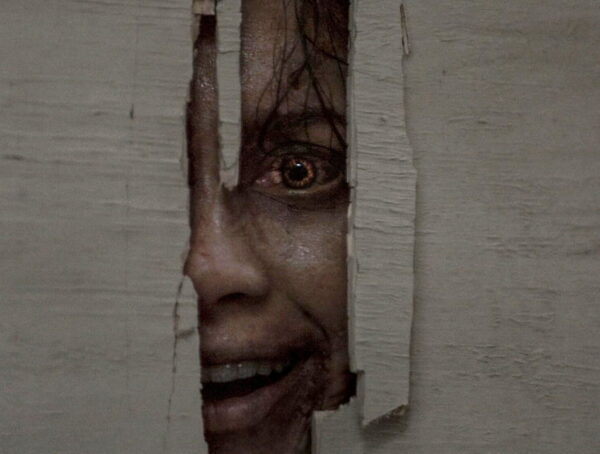
Opposite him, Inde Navarrette leaves the strongest impression, sinking her teeth into Nikki with a wildly expressive and magnetically unhinged performance. She dominates every scene, whether through a volatile stillness or startling outbursts, conveying that something within her is fundamentally wrong. Her movements, her gaze, and the subtle shifts in her demeanour make the character feel off‑kilter in a way that turns every interaction uneasy. Obsession is at its most emotional when brief flashes of Nikki’s true consciousness break through the possession, hinting at the person she was and adding a tragic undertone to Navarrette’s already commanding work.
The film is equally impressive on a technical level, with sound design that feels deliberately intimidating even in the quieter scenes. The cinematography makes great use of darker visual spaces, playing with shadows in ways that reinforce the story’s eeriness, while Barker and his team adopt a unique visual style that lets performance and framing carry much of the suspense. There is a quiet confidence to the camera work, with lenses lingering on characters just long enough for small shifts in expression or movement to grow increasingly loaded. The score also stands out with its ambient, moody presence, blending comfort and dread to enhance the atmosphere. Together, these elements create a technical foundation that sustains the film’s tension from start to finish.
Ultimately, Curry Barker’s Obsession is a slick and chilling horror film that explores the darker side of desire with confidence and style. It doesn’t break new ground, but it delivers its ideas with precision, supported by distinctive visuals, thought‑provoking themes, and standout work from its leads. It’s an impressive showcase for the new talent involved, suggesting Barker has a promising future in the horror genre. And with the abilities of the One Wish Willow left ambiguous, there’s clear sequel potential and plenty of fresh territory left to explore.